
Manufacturing as a Service (MaaS) – Assessing the REED project from a Life Cycle Perspective
Manufacturing as a Service Assessing REED from a Life Cycle perspective
Sustainable manufacturing is no longer a distant ambition. It is becoming a must have across Europe. New regulations such as the Digital Product Passport (DPP) under the Ecodesign for Sustainable Products Regulation (ESRS) are creating a roadmap for transparency and responsibility in industry. In machining and bulky part production, where materials are heavy and processes require a lot of energy, knowing the environmental impact behind every component is essential. It helps companies show real proof of sustainability and trace their environmental impacts along the supply chain. By providing an environmental impact simulation and monitoring tool for REED, measurable targets for specific products and production orders can be developed. The concept of dynamic life cycle assessment, where production processes are predicted and adjusted on-the-fly based on sensor data, is under-explored today and can contribute significantly to decision-making.
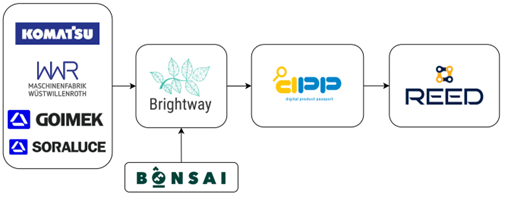
Figure 1: Dataflows in REED for environmental impact simulation and monitoring for all use cases
REED brings this future into the present. The platform combines Life Cycle Assessment with real manufacturing data so environmental performance can be understood and improved at every step. We use Brightway, a leading open-source sustainability engine, together with the BONSAI background database to provide reliable insights into materials, energy use and emissions. BONSAI was developed within the Getting the Data Right project, led by Aalborg University. It is a freely available, state-of-the-art input–output database designed for environmental impact analysis.
Because the platform connects directly to sensor data from the shop floor, the environmental footprint is no longer static. It updates continuously as production happens. Companies can test what-if scenarios compare different production conditions and make smarter decisions before changes are applied in the factory. This is especially important for complex supply chains and different types of steel where impact profiles can vary significantly.
All insights become part of the Digital Product Passport ensuring trustworthy environmental information travels with each product. With REED, manufacturers gain the tools to be more transparent, more circular and more competitive in a sustainability driven market.
Authors: Tim Weber, Miguel F Astudillo, Oskar Lasse Lilleøre, Simon Vemmelund, Marti Rufi Salis (2-0 LCA)